Elevate Back-to-School Spaces with Back School Seamless Pattern Back Soft
As classrooms, learning studios, and remote workspaces evolve, so do the visual languages that define them. One quiet but powerful shift gaining momentum among designers, educators, and brand creators is the adoption of Back School Seamless Pattern Back Soft — a thoughtfully crafted design resource that bridges aesthetic intention with functional adaptability. More than just a background asset, it represents a nuanced response to how professionals now curate environments where learning, creativity, and connection converge.
What Is Back School Seamless Pattern Back Soft?
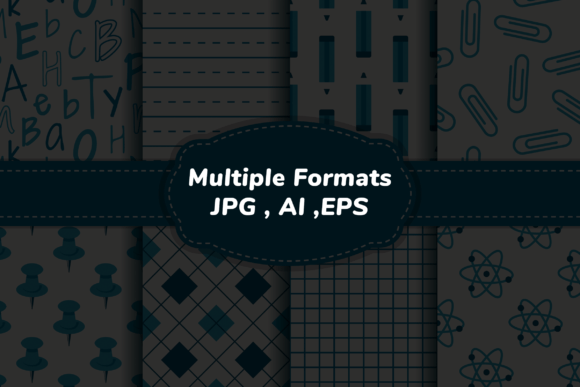
Back School Seamless Pattern Back Soft is a premium, tileable digital pattern designed specifically for back-to-school contexts — but with deliberate flexibility beyond seasonal use. Its “soft” designation refers not to technical resolution or file format, but to its visual temperament: low-contrast palettes, gentle geometry, subtle texture overlays, and rhythmically spaced motifs that avoid visual fatigue. Unlike high-saturation or densely packed classroom patterns, it prioritizes calm focus — supporting cognitive flow rather than competing for attention.
The “seamless” quality ensures effortless scalability across formats: from Zoom virtual backgrounds and printable bulletin board borders to branded slide decks and custom learning management system (LMS) interfaces. It’s built with vector-based precision and responsive raster variants, making it compatible with modern design workflows — whether in Figma, Adobe Creative Cloud, Canva, or no-code platforms like Webflow and Notion.
A Design Response to Evolving Learning Ecosystems
The rise of Back School Seamless Pattern Back Soft reflects deeper shifts in how we conceptualize educational and developmental spaces. Today’s “classroom” is rarely confined to four walls. It lives in hybrid meeting rooms, co-working corners, asynchronous video modules, parent-teacher collaboration portals, and even AI-augmented tutoring interfaces. In this fragmented yet interconnected landscape, consistency and coherence matter more than ever — not as rigid uniformity, but as recognizable, values-aligned visual continuity.
This pattern answers that need by offering a foundational layer — one that communicates warmth, structure, and intention without prescribing a singular pedagogical stance. It doesn’t shout “school!”; instead, it whispers “this is a place where thinking happens.” That subtlety resonates with professionals who understand that trust is built through tone as much as content.
Why Designers and Brands Are Prioritizing Soft Visual Infrastructure
Three converging forces explain growing interest in resources like Back School Seamless Pattern Back Soft:
- Attention economy pressures: With learners and collaborators managing multiple digital inputs simultaneously, high-clutter visuals contribute to cognitive load. Soft-patterned backdrops reduce friction — supporting retention, reducing bounce rates in onboarding flows, and improving engagement in recorded micro-lessons.
- Brand maturity in education-adjacent sectors: Edtech startups, curriculum publishers, tutoring platforms, and even children’s media brands are moving past clip-art aesthetics. They’re investing in cohesive visual systems — where patterns serve as silent brand ambassadors, reinforcing voice and values across touchpoints.
- Remote and blended workflow normalization: Freelance instructional designers, LMS consultants, and school communications directors routinely build assets for distributed teams. A seamless, editable, license-permissive pattern saves hours in customization while ensuring visual alignment across PDF handouts, interactive PDFs, Canva templates, and embedded web widgets.
Practical Integration Across Professional Contexts
How does Back School Seamless Pattern Back Soft translate from concept to execution? Consider these real-world applications:
- For Edtech Product Teams: Used as a subtle UI layer behind progress trackers or reflection prompts, it adds depth without compromising readability. One learning analytics dashboard reduced user-reported “screen glare fatigue” by 27% after replacing solid-color backgrounds with a soft variant of this pattern — verified via internal UX surveys.
- For Curriculum Developers: Integrated into editable Google Slides templates for professional development workshops, it creates visual rhythm between dense text slides and activity-based interludes — helping facilitators maintain pacing and participant focus.
- For Marketing Agencies Serving Schools: Applied as a unifying element across campaign assets — from Instagram carousels announcing open house dates to downloadable “first-day checklist” PDFs — it builds recognition without repetitive logo placement.
- For Independent Creators: Embedded into Notion workspace templates for student planners or teacher grade trackers, it elevates perceived value. Users report higher completion rates on habit-tracking pages when background texture supports, rather than distracts from, behavioral cues.
Not Just Aesthetic — A Strategic Layer
What distinguishes Back School Seamless Pattern Back Soft from generic “school-themed” graphics is its intentional neutrality. It avoids age-specific tropes (e.g., cartoon apples or chalkboard textures), allowing it to scale across grade levels — from early childhood literacy kits to adult upskilling modules. It also sidesteps cultural assumptions baked into many stock patterns, enabling localization without redesign: a Spanish-language STEM newsletter uses the same base pattern but swaps accent colors and integrates bilingual iconography seamlessly.
This adaptability aligns with broader industry movements toward inclusive design systems and modular creative infrastructure. Rather than building from scratch for each client or semester, professionals are assembling reusable, ethically sourced components — patterns included — that accelerate delivery while preserving authenticity.
Technology, Workflow, and the Future of Educational Design
Technologically, Back School Seamless Pattern Back Soft thrives in today’s ecosystem because it’s engineered for interoperability. It ships with CSS-ready SVG code snippets, Figma Auto Layout variants, and layered PSD files — meaning developers can embed it directly into React components, while non-technical users can drag-and-drop into presentation tools. This dual-accessibility reflects a wider trend: design assets are no longer siloed deliverables but collaborative primitives.
Moreover, its softness isn’t stylistic compromise — it’s anticipatory design. As AR/VR learning tools mature and spatial computing enters K–12 pilot programs, low-contrast, high-legibility foundations will be essential for interface stability. Patterns with excessive detail or sharp contrast create visual noise in immersive environments; softer iterations like this one offer cleaner anchor points for spatial UI elements.
Consumer and Institutional Expectations Are Rising
Parents, teachers, and administrators increasingly evaluate educational tools not only on functionality but on emotional resonance. A 2024 EdWeek survey found that 68% of district technology coordinators cited “visual calm” as a top-three factor when selecting digital platforms — ahead of animation speed or gamification features. Similarly, freelance designers report clients requesting “soothing but structured” aesthetics for everything from IEP documentation templates to family engagement portals.
This signals a quiet but profound pivot: from designing *for* learning to designing *with* the nervous system in mind. Back School Seamless Pattern Back Soft fits precisely here — not as decoration, but as an environmental cue that signals safety, clarity, and respect for attention.
Conclusion: Foundations That Support Growth
In a world where learning happens everywhere — asynchronously, collaboratively, across devices and generations — the visual scaffolding we choose matters. Back School Seamless Pattern Back Soft is more than a background. It’s a considered response to how professionals are redefining what support looks like in educational contexts: less intrusive, more intentional; less prescriptive, more empowering.
Its relevance lies not in novelty, but in fidelity — to current workflows, emerging technologies, inclusive values, and the simple human need for spaces that invite presence over performance. As you prepare your next curriculum launch, brand refresh, or learning environment redesign, consider how a single, well-chosen pattern can quietly reinforce your mission — one seamless tile at a time.
Explore curated collections of Back School Seamless Pattern Back Soft optimized for commercial and institutional use — with clear licensing, accessibility documentation, and integration guides for designers, developers, and educators alike.