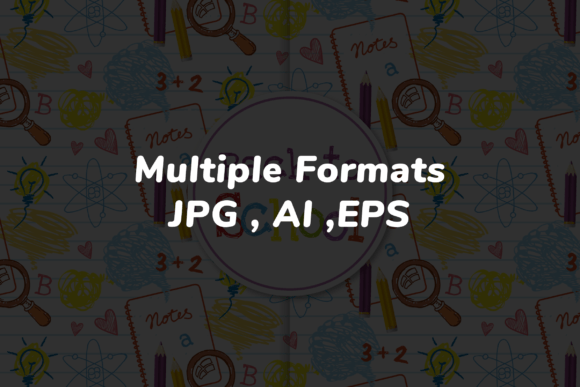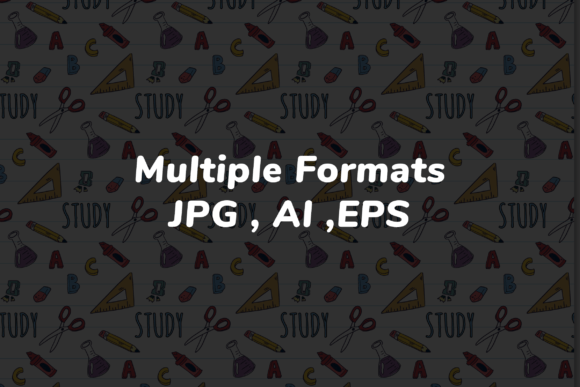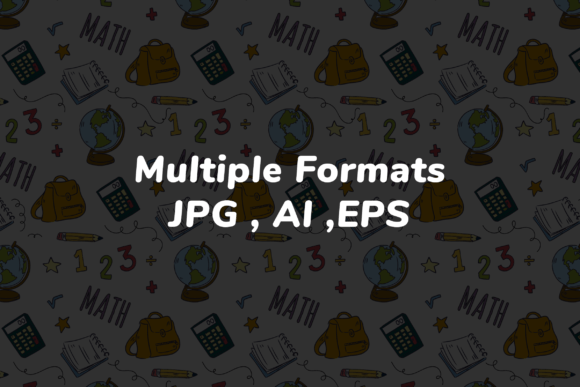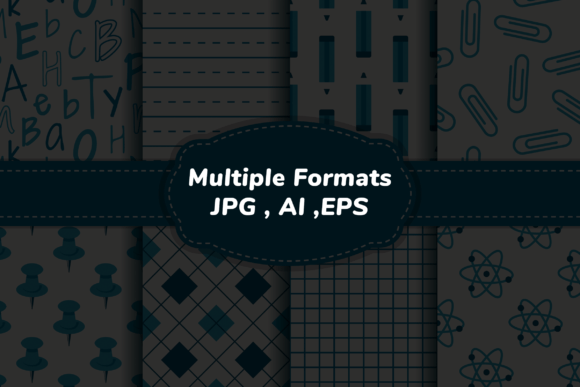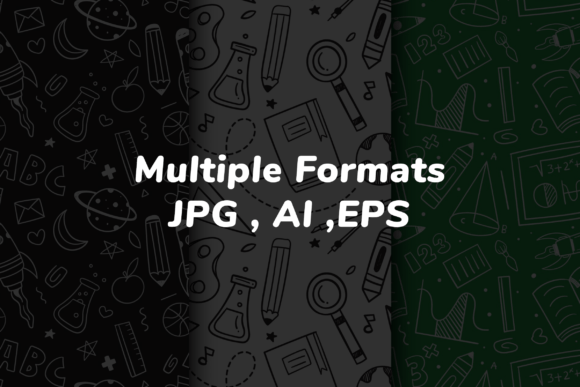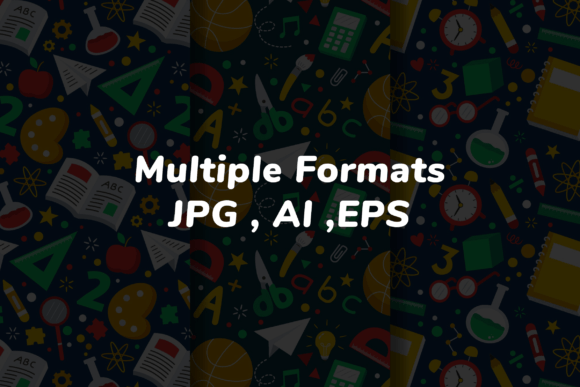
Back School Seamless Pattern
Back School Seamless Pattern isn’t just a design asset—it’s a strategic tool for professionals who shape environments where learning, engagement, and intentionality converge. Whether you’re designing classroom walls, launching an education-focused brand, developing digital learning platforms, or curating retail back-to-school campaigns, this pattern type offers more than visual appeal. It delivers continuity, cohesion, and quiet authority—qualities that support clarity in communication and consistency in experience.
What Makes a Back School Seamless Pattern Strategically Useful?
A Back School Seamless Pattern is a repeatable, tileable graphic element—often rooted in school motifs like chalkboards, geometric rulers, open textbooks, pencil sketches, or abstracted classroom icons—that integrates without visible seams across surfaces. Its value lies not in decoration alone, but in its capacity to signal purpose at scale: a consistent visual language that reinforces theme, tone, and audience alignment without demanding attention.
For educators building inclusive learning spaces, it supports environmental scaffolding—subtly reinforcing routines and expectations through repetition and familiarity. For marketers, it strengthens campaign coherence across print, web, and social touchpoints. For product creators, it enables scalable asset development: one well-designed Back School Seamless Pattern can generate banners, slide backgrounds, worksheet borders, packaging textures, and app UI elements—without redesigning each time.
Where Intentional Use Creates Real Leverage
Strategic adoption begins with alignment—not aesthetics first, but outcomes first. Consider these grounded use cases:
- Classroom Theme Systems: A teacher selecting a Back School Seamless Pattern tied to “growth mindset” (e.g., subtle seedlings + notebook grid) creates continuity across anchor charts, student handouts, and digital assignments—reinforcing the concept through environment, not just instruction.
- Educational Brand Positioning: An edtech startup launching a literacy platform might embed a custom Back School Seamless Pattern into onboarding flows and dashboard headers. The repeated motif becomes part of the brand’s visual grammar—calm, structured, learner-centered—differentiating it from flashier, less grounded competitors.
- Small-Business Retail Launches: A stationery shop introducing a back-to-school collection can apply the same seamless pattern across shelf talkers, email headers, Instagram story templates, and packaging liners. That consistency lowers cognitive load for customers and builds recognition faster than rotating visuals would.
In each case, the pattern serves a functional role: reducing decision fatigue, supporting message retention, and scaling effort without diluting intent.
Planning Before Picking: Three Critical Filters
Before sourcing or commissioning a Back School Seamless Pattern, apply these filters to avoid misalignment:
- Goal Clarity: Ask: What behavior, perception, or outcome should this support? If the answer is “it looks fun,” pause. Patterns used without defined goals often compete with content, distract from calls to action, or unintentionally signal unseriousness—especially in professional or academic contexts.
- Context Fit: Evaluate where and how the pattern will appear. A dense, high-contrast Back School Seamless Pattern may energize a bulletin board but overwhelm a reading nook or reduce readability on a digital worksheet. Lighter, lower-contrast variants—think soft watercolor pencils or faint graph lines—often serve broader functional needs.
- Ownership & Adaptability: Can you modify color, scale, or density? Off-the-shelf patterns are efficient—but if your brand palette shifts quarterly or your audience spans age groups (e.g., early learners vs. adult upskillers), prioritize editable source files (SVG, PSD, or layered AI) over static JPEGs.
Risks of Using Back School Seamless Pattern Without Strategy
When deployed reactively, even well-designed patterns introduce friction. Common pitfalls include:
- Visual noise without narrative: A playful pattern applied across every surface—walls, handouts, slides, websites—can erode hierarchy. Learners and users stop distinguishing primary content from background, leading to slower comprehension and higher dropout rates.
- Brand dilution: Using generic “school-themed” patterns (e.g., clipart apples, cartoon backpacks) without tying them to authentic values or mission risks positioning your offering as decorative rather than differentiated.
- Operational drag: Choosing a complex pattern that requires manual tiling or constant resizing slows production cycles—especially for teams managing tight deadlines across multiple formats (e.g., teachers prepping for开学, marketers executing seasonal campaigns).
None of these are flaws in the pattern itself. They reflect decisions made without anchoring to purpose, audience, or workflow reality.
How to Build With Purpose—Not Just Decorate
Treat your Back School Seamless Pattern as infrastructure, not ornament. Start small, test deliberately, and scale only when evidence supports it.
Begin with one high-impact application: a digital resource library landing page, a core classroom display zone, or a lead-generation email template. Apply the pattern there—and measure what changes. Does time-on-page increase? Do students reference visual cues during discussion? Do conversion rates hold steady when the pattern replaces a plain background? These signals tell you whether the pattern is serving function—or merely filling space.
Then layer intentionally. Add subtle variation: rotate the pattern 15 degrees for a secondary section; desaturate it by 20% for printable versions; overlay a 10% opacity white wash for text-heavy areas. These micro-adjustments preserve cohesion while guiding attention—proving that restraint, not repetition, is what makes a Back School Seamless Pattern powerful.
Long-Term Value Lies in Consistency, Not Novelty
Marketers often chase “fresh” back-to-school visuals each August—new fonts, new palettes, new motifs. But longevity comes from disciplined reuse of assets that align with enduring priorities. A thoughtfully chosen Back School Seamless Pattern, applied with consistency across two or three academic years, becomes part of your organizational memory: students recognize it as “how things feel here”; parents associate it with reliability; team members internalize its logic and extend it intuitively.
This isn’t about rigidity. It’s about building visual equity—the cumulative trust earned when every interaction feels recognizably yours, even as content evolves. That kind of coherence doesn’t emerge from trend-following. It emerges from planning, testing, refining, and committing.
Final Guidance for Decision-Makers
If you’re evaluating whether to invest time or budget into a Back School Seamless Pattern, ask yourself three questions before proceeding:
- Does this directly support a specific goal we’ve measured or observed—not just a vague desire for “more energy” or “better vibes”?
- Have we tested it in at least one real-world context where performance matters—like student engagement, user task completion, or campaign CTR?
- Can our team maintain it without added overhead—through editable files, documented usage guidelines, and clear ownership?
If the answer to all three is yes, proceed. If not, delay. Refine your goal. Pilot a simpler version. Revisit once the need is sharper and the context clearer.
Back School Seamless Pattern works best not as a starting point—but as a deliberate punctuation mark in a larger strategy. It gains meaning from what surrounds it: strong objectives, thoughtful execution, and respect for the people who’ll encounter it. Use it that way—and it won’t just decorate your space. It will strengthen your impact.