Seasonal Color by Number Coloring Pages: Creative Learning All Year Round
Imagine a classroom buzzing with quiet focus—not from worksheets or screens, but from crayons gliding across paper, numbers guiding color choices, and seasonal themes sparking joyful recognition. Seasonal Color by Number Coloring Pages blend playful artistry with foundational learning in a way that feels effortless, engaging, and deeply meaningful for students of all ages. More than just “busy work,” these printable resources are purposefully designed to support cognitive development, emotional expression, and curriculum-aligned skill-building—season after season.
What Are Seasonal Color by Number Coloring Pages?
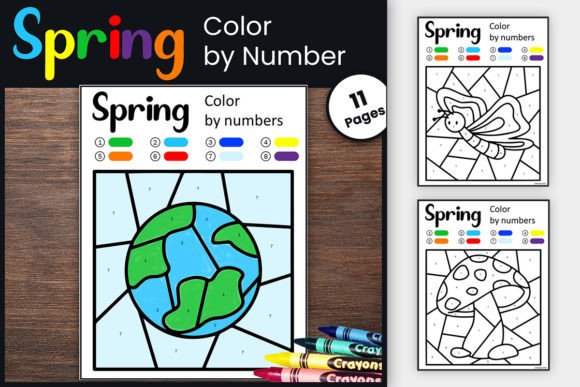
At their core, Seasonal Color by Number Coloring Pages are themed activity sheets where each section of an illustration is labeled with a number corresponding to a specific color. Students use the included color key to fill in the design—revealing a vibrant, cohesive image tied to a time of year or holiday. Unlike generic coloring pages, these are intentionally organized around the natural rhythm of the school year and calendar: Back to School, Fall, Halloween, Thanksgiving, Christmas, Winter, Valentine’s Day, Easter, Spring, and Summer.
This seasonal structure does more than add visual variety—it grounds abstract concepts like time, change, and cultural traditions in tangible, hands-on experiences. A first grader coloring a pumpkin while matching “3 = orange” reinforces both number sense and autumn vocabulary. A fourth grader shading a snowflake pattern while counting symmetrical sections practices fine motor control *and* geometry awareness—all without realizing they’re “learning.”
Why Seasonal Themes Matter in Early and Elementary Education
Children learn best when content connects to their lived world. Seasonal themes provide a familiar, recurring framework that helps students organize knowledge, anticipate transitions, and build vocabulary organically. Research in early childhood education consistently shows that thematic instruction improves retention, engagement, and cross-curricular connections.
For example:
- Fall pages might feature acorns, scarecrows, or migrating geese—prompting discussions about weather patterns, plant life cycles, and animal behavior.
- Spring illustrations (butterflies, rainbows, blooming flowers) naturally invite science talks about pollination, water cycles, and growth.
- Back to School designs (notebooks, pencils, smiling backpacks) ease social-emotional transitions and foster classroom community.
By embedding academic skills within culturally resonant moments, educators transform routine practice into meaningful, memorable experiences.
How Color by Number Builds Foundational Skills
Beneath the surface of fun lies robust pedagogical value. Each page supports multiple developmental domains simultaneously:
- Number Recognition & Counting Fluency: Matching digits to colors strengthens one-to-one correspondence and numeral identification—critical precursors to arithmetic fluency.
- Color Identification & Visual Discrimination: Distinguishing between subtle shades (e.g., “teal” vs. “turquoise”) sharpens visual processing and descriptive language.
- Fine Motor Development: Staying within lines, controlling grip, and switching between colors enhance hand strength and coordination—skills vital for handwriting and digital tool use.
- Focus & Task Persistence: Completing a multi-step, self-paced project builds working memory and attention stamina—especially valuable for neurodiverse learners.
- Creative Confidence: Because the “right answer” is built into the guide, students experience low-stakes success, reducing anxiety and encouraging risk-taking in other artistic or academic areas.
Designed for Real Classrooms—and Real Life
These coloring pages aren’t theoretical tools—they’re classroom-tested, teacher-approved resources built for practicality. Every sheet is formatted at 8.5 × 11 inches, optimized for standard printers and copiers. The high-resolution, print-ready files ensure crisp lines and clear numerals—even when duplicated dozens of times.
That means no last-minute formatting headaches. No pixelated downloads. Just open, print, and go—whether you’re prepping for a rainy-day center activity, reinforcing math facts before recess, or creating calm during post-lunch transitions.
And because they’re seasonally versatile, teachers can use them flexibly:
- As morning warm-ups to activate focus
- In small-group rotations to differentiate math practice
- During holiday parties as inclusive, screen-free engagement
- As take-home packets that families can enjoy together
- Even in therapy settings to support sensory regulation and emotional labeling
Who Benefits Most—and How?
While often associated with early elementary grades, Seasonal Color by Number Coloring Pages serve a surprisingly wide audience:
Early Learners (Pre-K–Grade 2)
Build number sense through repetition and visual reinforcement. Simple shapes and bold outlines reduce frustration and increase independence.
Upper Elementary Students (Grades 3–5)
Engage with more intricate designs—like detailed mandalas for Winter or layered floral patterns for Spring—that challenge spatial reasoning and patience. Teachers can extend learning by asking students to create their own color-by-number keys or convert fractions/decimals into color codes.
Special Education & Inclusive Classrooms
Offer predictable structure, clear visual cues, and achievable goals—key supports for students with ADHD, autism, or processing differences. The calming, rhythmic nature of coloring also aids self-regulation.
Home Learners & Caregivers
Provide screen-free enrichment that aligns with school themes—making home-school connections seamless. Parents appreciate the educational transparency: it’s obvious *what* their child is practicing, not just *that* they’re occupied.
Common Misconceptions—Clarified
Myth: “Color by number is just mindless coloring.”
Truth: It’s structured visual-mathematical thinking—requiring attention to detail, symbolic decoding, and sequential execution. Studies link such activities to improved executive function in young children.
Myth: “Only younger kids enjoy this.”
Truth: Teens and adults use color-by-number for stress relief and mindfulness. Age-appropriate complexity (e.g., gradient shading, cultural motifs) keeps older students engaged and proud of their finished work.
Myth: “It doesn’t align with standards.”
Truth: When integrated intentionally, it supports Common Core Math Standards (K.CC.A.3, K.CC.B.4), SEL competencies (self-management, responsible decision-making), and National Arts Standards (creating, responding, connecting).
Bringing Seasons to Life—One Page at a Time
From the first crocus poking through spring soil to the twinkle of holiday lights on a winter window, our Seasonal Color by Number Coloring Pages honor the beauty and rhythm of the year—not as decoration, but as curriculum. They remind us that learning doesn’t happen in isolation. It breathes with the seasons, grows with celebrations, and flourishes when joy and rigor coexist.
Whether you're a kindergarten teacher planning your September centers, a homeschool parent seeking meaningful holiday activities, or a therapist building coping toolkits—these pages meet you where you are. They’re ready to print, easy to adapt, and endlessly inspiring.
Ready to bring colorful creativity into your classroom or home? Explore the full collection today—and watch numbers, colors, and seasons come alive—one thoughtful stroke at a time.