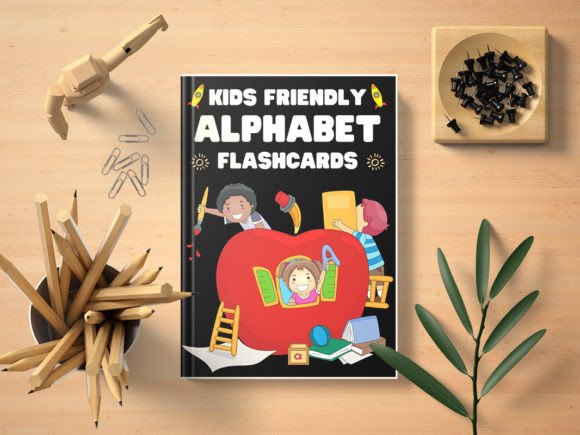
Kids Friendly Alphabet Flashcards BTS
Whether you’re a preschool teacher prepping your classroom for September, a homeschooling parent building a gentle literacy routine, or a small business owner designing themed learning kits for Etsy — Kids Friendly Alphabet Flashcards BTS is built for real use, not just shelf appeal. It’s not another generic alphabet set with clipart and faded fonts. This is a thoughtfully crafted, 27-page A4 resource that meets kids where they are — curious, energetic, and full of questions — while giving adults the flexibility to adapt it across settings without extra work.
Where and When These Flashcards Actually Get Used
Think about the moments when letter learning sticks: during quiet morning table time before school drop-off, in the calm corner of a busy daycare room, on a rainy afternoon with a toddler who won’t sit still for worksheets, or even as part of a digital lesson plan shared via Google Classroom. Kids Friendly Alphabet Flashcards BTS fits those moments because it’s designed for *movement*, *repetition*, and *recognition* — not passive viewing.
A kindergarten teacher in Portland uses the Back-to-School Edition to launch her “Letter of the Week” routine. She prints one card per week on cardstock, laminates it, and hangs it beside the calendar. Kids point, name the object (“B is for backpack!”), trace the letter shape with their fingers, and add a photo of their own backpack to the bulletin board. The consistent visual language — bright colors, clear fonts, thematic objects like lunchboxes, pencils, and school buses — makes transitions smoother and expectations clearer.
Meanwhile, a freelance early childhood educator in Toronto bundles the flashcards into a printable “Back-to-School Prep Pack” she sells on her website. She adds simple activity prompts (e.g., “Find something at home that starts with ‘S’”) and links them to speech development goals. Her clients — mostly parents of 3- to 5-year-olds — appreciate that the cards don’t require printing in color to be effective, thanks to strong contrast and clean outlines.
Why Format Flexibility Matters More Than You Think
The inclusion of both PNG and JPG A4 files isn’t just about technical variety — it solves actual problems. PNGs let you drop individual letters onto Canva slides for virtual storytime without white borders. JPGs print reliably on home inkjets or bulk office printers. No resizing headaches. No blurry text. No guessing whether the “Q” will render clearly on a tablet screen during circle time.
A small publisher creating bilingual literacy resources used the base illustrations as templates — swapping English words for Spanish ones while keeping the same animal or object (e.g., “L is for león” instead of “lion”). Because the originals were high-resolution and cleanly layered, editing took under five minutes per card. That kind of efficiency matters when you’re juggling deadlines and tight budgets.
Real Learning Happens in Context — Not Isolation
These aren’t abstract letter shapes floating in space. Each card pairs the uppercase and lowercase letter with an instantly recognizable, school-relevant item: “R is for ruler”, “T is for teacher”, “Z is for zebra on the zoo field trip poster”. That context does heavy lifting — helping children connect symbols to meaning, sound to sight, and learning to lived experience.
For kids who struggle with auditory processing or attention, visual anchors like the backpack on the “B” card or the apple on the “A” card provide nonverbal cues that support memory and recall. One speech-language pathologist told us she uses the flashcards during articulation drills — pairing the “P” card with playful plosive practice (“Pop! Pop! Popcorn!”) — because the illustration gives kids something concrete to return to when their focus drifts.
Who Benefits — and How They Use It Differently
- Classroom teachers use the cover page as a bulletin board header and rotate cards weekly — reinforcing consistency without monotony.
- Homeschoolers print two copies: one for matching games, one for cutting out and pasting into a personalized alphabet journal.
- Digital creators import the PNGs into interactive PDFs or simple drag-and-drop apps for iPad-based literacy stations.
- Therapists and tutors layer them into multi-sensory routines — pairing the “F” card with felt letters, finger painting, or sound-play games.
- Small shop owners bundle them with crayons or mini whiteboards as low-cost “first school kit” offerings — especially popular in July and August.
What to Consider Before You Download or Print
First: match the file type to your workflow. If you plan to edit text or layer elements, PNGs give you transparency and crisp edges. If you’re sending files to a local print shop for bulk laminated sets, JPGs often process faster and more reliably.
Second: think about durability. While the files are print-ready, using 110–160 gsm cardstock (not standard copy paper) makes a real difference in how long the cards last through toddler hands and repeated use. Laminating helps — but even un-laminated, the bold lines and generous spacing hold up well to marker tracing or finger tracing.
Third: consider pacing. With 26 letters plus a cover, it’s easy to feel pressured to “get through” them all. In practice, most educators and parents find deeper learning happens when they spend 3–5 days on a single letter — exploring sounds, writing, related vocabulary, and real-world connections. The design supports that slowness, not speed.
It’s Not Just About the Alphabet — It’s About Belonging
There’s subtle intention behind the “Back to School” theme: it signals safety, routine, and belonging. For a child starting preschool for the first time, seeing a friendly “D is for door” card helps normalize the new environment. For a child re-entering after a break, “W is for welcome back!” (on the cover or in custom notes) adds emotional scaffolding alongside academic support.
That’s why so many users report coming back for second downloads — not to replace lost files, but to create variations: black-and-white versions for coloring, simplified layouts for neurodivergent learners, or enlarged single-letter posters for wall displays. The foundation is solid enough to build on — without needing permission or complicated licensing.
Kids Friendly Alphabet Flashcards BTS works because it respects both the child’s developmental needs and the adult’s practical constraints. It doesn’t ask you to overhaul your system — just to pick up a card, say the sound, point to the picture, and keep going. And sometimes, that’s exactly what makes learning stick.