Canva Newsletter Template for Kids
Keeping young learners, families, and staff connected doesn’t have to mean wrestling with complex design tools or sacrificing visual appeal for practicality. The Canva Newsletter Template for Kids bridges that gap—offering educators, parents, and school administrators a ready-to-use, thoughtfully structured foundation for clear, joyful communication. It’s not just another template; it’s a response to how modern classrooms operate: fast-paced, visually driven, and increasingly collaborative across home and school environments.
Why This Template Fits Real Classroom Rhythms
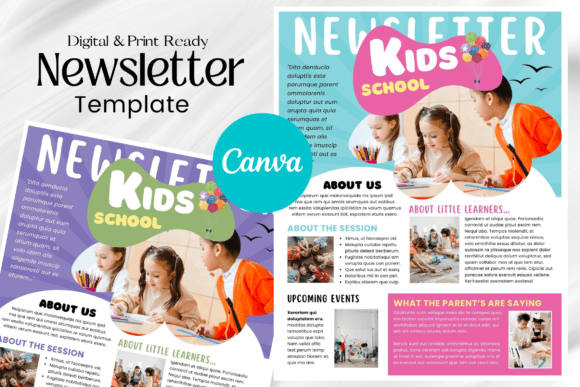
Teachers today juggle lesson planning, assessment, differentiation, and relationship-building—all while managing communication overload. Email inboxes overflow, apps fragment attention, and printed notices often go unread. A well-designed newsletter cuts through the noise—not by adding more content, but by organizing what matters most in a way children and adults can both engage with. This template supports that goal with intuitive sections: upcoming events (field trips, book fairs, science showcases), classroom highlights (student work spotlights, reading milestones), quick reminders (supply lists, photo day details), and warm, inclusive language that reflects the values of early learning communities.
Its colorful palette isn’t just decorative—it’s functional. Research in educational psychology shows that age-appropriate visual cues improve information retention for both children and caregivers scanning busy schedules. Rounded fonts, playful icons, and balanced white space reduce cognitive load, making it easier for busy parents to absorb key dates in under 30 seconds—and easier for kids to recognize their own names or class photos when the newsletter is shared aloud or displayed in the classroom.
From Handwritten Notes to Digital-First Flexibility
Classroom communication has evolved significantly over the past decade. What once meant photocopied bulletins stapled to backpacks now includes QR codes linking to video messages, embedded audio clips of student readings, or digital calendars synced across devices. Yet many schools still rely on outdated formats—or worse, no consistent format at all. The shift isn’t about going fully digital; it’s about meeting diverse needs with adaptable tools. That’s where this Canva newsletter template shines: it works equally well as a vibrant PDF for email, a printable two-page handout for take-home folders, or even a simplified version projected during morning meetings.
Unlike static Word documents or generic Canva templates built for corporate audiences, this one was developed with elementary workflows in mind. Headers are large enough for emerging readers to identify topics. Photo placeholders accommodate group shots, individual artwork, or classroom setups without cropping awkwardly. Even spacing between sections allows room for handwritten notes or stickers—keeping the human touch alive alongside digital efficiency.
Customization Without Compromise
“Fully editable” means more than swapping text and colors. Within Canva, users can adjust column widths to emphasize announcements over schedules—or vice versa—based on monthly priorities. You can replace stock illustrations with actual student-drawn borders, embed hyperlinks to class blogs or Seesaw portfolios, or add bilingual labels for dual-language programs. Because it’s built on Canva’s platform, accessibility features like alt-text support, contrast checkers, and font resizing remain intact—helping ensure your message reaches every family, regardless of device or ability.
For administrators supporting multiple grade levels, the template scales thoughtfully. A kindergarten newsletter might spotlight “Letter of the Week” and snack schedule, while a fourth-grade version could feature student-led inquiry projects and library research tips—all using the same underlying structure. Consistency builds familiarity; flexibility preserves authenticity.
Printable Design Meets Modern Expectations
Despite the rise of digital platforms, print remains essential in early education contexts. Not all families have reliable internet access. Some prefer tangible materials they can post on fridges or annotate during parent-teacher conferences. Others use printed newsletters as literacy tools—highlighting vocabulary words, circling dates with colored pencils, or cutting out event cards for classroom bulletin boards. This template honors that reality with optimized margins, CMYK-ready color profiles, and clean vector-based graphics that hold up whether printed on school printers or high-resolution home inkjets.
And because it exports seamlessly to PDF, teachers avoid common formatting pitfalls—like shifted images or missing fonts—that undermine credibility. No special software is needed beyond a free Canva account. That lowers the barrier for part-time aides, volunteer coordinators, or substitute teachers who may step in to update communications mid-month.
Supporting Inclusion Through Intentional Design
A child-friendly newsletter does more than look cheerful—it signals belonging. When students see themselves reflected—not just as names on a list but as contributors to the narrative—their investment deepens. This template encourages that by reserving prominent space for student voice: quotes from circle time, captions written by first graders, or illustrated “What I Learned This Month” boxes. For neurodiverse learners, predictable layout patterns reduce anxiety around new information. For multilingual families, clear visual hierarchy supports comprehension even when English isn’t the primary home language.
It also subtly supports teacher well-being. When communication feels less like an administrative chore and more like a meaningful extension of pedagogy, burnout risk decreases. One third-grade teacher in Ohio reported cutting her monthly newsletter prep time from three hours to 45 minutes after adopting a similar Canva-based workflow—time she now redirects toward personalized feedback and small-group planning.
Practical Next Steps for Educators and Families
If you’re considering integrating this template into your routine, start small. Choose one recurring section—like “Upcoming Events”—to pilot first. Invite students to help select photos or brainstorm fun section titles (“Our Super Science Corner,” “Kindness Spotlight”). Share a draft with a few trusted parents for feedback on clarity and tone before wider distribution.
For school leaders, consider pairing the template with a brief internal guide: recommended image sizes, tips for writing concise yet warm copy, and suggestions for rotating newsletter responsibilities among grade-level teams. That builds capacity without adding burden.
Remember: the goal isn’t perfection—it’s connection. A newsletter doesn’t need to be flashy to be effective. It needs to be timely, truthful, and tender in its attention to the people it serves. The Canva Newsletter Template for Kids provides the scaffolding. You bring the heart, the context, and the care.
Looking Ahead—Without Overpromising
As AI-assisted design tools become more common, templates like this will grow even more valuable—not as replacements for human judgment, but as accelerants for intentionality. Future versions may integrate smart suggestions for inclusive language or auto-generate bilingual summaries—but only if those features serve real classroom needs, not tech trends. For now, what matters most is that educators have a tool that respects their expertise, honors children’s developmental stages, and simplifies logistics without diluting warmth.
Whether you're preparing for back-to-school, launching a new after-school club, or simply refreshing how your classroom shares joy and growth, this template offers a grounded, joyful starting point. It won’t solve every challenge—but it might give you back an hour each month. And in education, time is the rarest, most precious resource of all.