The Cool Kid Just Showed Up Svg, Skull
If you’ve landed on The Cool Kid Just Showed Up Svg, Skull, you’re likely planning a bold, youth-forward project — maybe custom back-to-school tees for your kids’ crew, punk-inspired wall art for a teen’s room, or edgy merch for a small business launch. This SVG bundle is designed for creators who value attitude, clarity, and compatibility — not just aesthetics. But before you click “add to cart,” there are practical details many overlook that directly impact whether your project succeeds or stalls at the first cut or print.
What It Actually Is (and Isn’t)
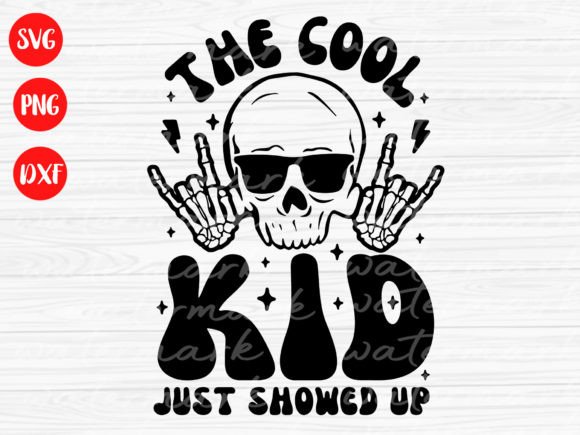
The Cool Kid Just Showed Up Svg, Skull is a digital design package built for versatility: one clean SVG file (compatible with Cricut Explore, Silhouette Designer Edition, Adobe Illustrator, Inkscape, CorelDRAW, and more), one DXF version (optimized for Silhouette users who need vector precision without layers), and one 300 ppi PNG with transparent background — ideal for high-res printing on stickers, posters, or digital overlays. It’s intentionally minimal, scalable, and ready for immediate use in cutting machines or design software.
Crucially, it is not a physical item. No shirt, sign, doormat, or wooden background will arrive in the mail. Those styled photos you see? They’re visual examples — inspiration only. The watermark backgrounds, mockup props, and lifestyle shots are not included. Confusing those with deliverables is the most common source of post-purchase frustration.
Assuming Compatibility Without Checking Your Software Version
SVG support varies widely. Older versions of Silhouette Studio (especially non-Designer Edition) can’t open layered SVGs properly — they’ll flatten or misalign elements. Similarly, some free versions of Inkscape may not render embedded fonts or clipping paths as intended. If you skip verifying your software’s SVG import capabilities first, you might waste 20 minutes troubleshooting instead of cutting. Better approach: Open your design app *before* purchasing and test with a free SVG from the same shop. Or check the product description for explicit version notes — this listing clearly states compatibility with Designer Edition and newer tools.
Misreading File Types as Interchangeable
Just because a file is labeled “SVG” doesn’t mean it works the same way across platforms. Some sellers offer “SVG” files that are actually raster-based PNGs saved with an .svg extension — useless for cutting. Others include SVGs with embedded bitmaps (not pure vectors), which won’t scale cleanly for large prints. With The Cool Kid Just Showed Up Svg, Skull, every format serves a purpose: the SVG is vector-native, the DXF ensures Silhouette accuracy, and the PNG delivers print-ready resolution. What to check: Zoom into the preview image at 400%. If edges stay razor-sharp, it’s truly vector. If they pixelate, it’s not suitable for cutting or large-format use.
Overlooking Use Context Before Designing Around It
Say you plan to iron this skull-and-phrase design onto toddler-sized onesies. A common misstep is scaling the SVG too large for a 3–4 inch chest area — then realizing the fine skull details vanish when shrunk to fit. Or using the PNG for vinyl cutting (it won’t work — PNGs lack vector paths). Worse, applying the design to dark fabric without checking if the PNG includes white underbase layers (it doesn’t — that’s a separate print prep step). Better choice: Start with your end use. For heat transfer vinyl on toddler shirts? Stick with the SVG and simplify fill areas in your software. For screen printing? Use the PNG as a guide, but rebuild outlines in Illustrator for crisp halftones.
Why “Back To School Svg” and “Youth Svg” Matter More Than You Think
This isn’t generic clipart. Phrases like “Back To School Svg” or “Youth Svg” signal intentional design thinking: balanced negative space for easy weeding, stroke-friendly outlines for vinyl, and letter spacing optimized for readability at 2–5 inches tall. The skull motif avoids excessive detail in the jawline or eye sockets — meaning fewer snags during cutting, less risk of tiny pieces lifting off the mat. That’s why educators making classroom banners, freelancers designing camp T-shirts, or parents personalizing backpacks all find it reliable. It’s not “cool” just visually — it’s cool because it works.
Realistic Expectations = Better Results
No digital file eliminates prep work entirely. Even with clean SVGs, you’ll likely adjust sizing, convert text to outlines (to prevent font substitution), or ungroup layers before sending to your machine. That’s normal — not a flaw in the file. What is avoidable is assuming the design will auto-fit your Cricut EasyPress settings or Silhouette registration marks. Always do a test cut on scrap material first. And remember: refunds aren’t offered for oversight — not because the seller is inflexible, but because digital files can’t be “returned” like physical goods. Reading the full description isn’t bureaucracy; it’s your first quality-control step.
A Quick Checklist Before You Download or Cut
- Confirm your software supports SVG import — especially if using Silhouette Basic Edition or older Adobe versions.
- Verify your project’s size constraints — measure your garment’s printable area or sign dimensions before scaling.
- Check the PNG’s transparency — open it in any image viewer. If you see a white or gray background instead of checkerboard, it’s not truly transparent.
- Remember: no mockups included — the t-shirt, doormat, or wooden background in previews are for visual context only.
- Save your layered SVG as a backup before ungrouping or editing — that way you can always revert.
When you choose The Cool Kid Just Showed Up Svg, Skull, you’re choosing a tool built for real workflows — not just trendy visuals. It respects your time by delivering what’s promised, in formats that behave predictably, with zero hidden surprises. That reliability is what turns a fun idea (“I’ll make punk-themed lunchboxes!”) into something you actually finish — and love showing off.