Groovy Second Grade SVG PNG: A Practical Design Asset for Educators, Crafters, and Small Business Owners
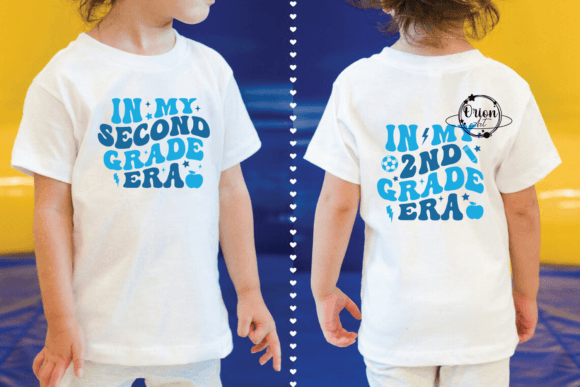
When preparing for Back to School Day—or launching a themed apparel line for elementary-aged kids—having the right digital asset makes all the difference. The Groovy Second Grade SVG PNG is more than a playful t-shirt design; it’s a production-ready creative component built for real-world use across multiple platforms and workflows. Designed specifically for second graders, it features a blue wavy groovy hippie aesthetic paired with the lighthearted phrase *“In my 2nd second grade era”*—a subtle nod to developmental milestones and classroom identity.
This listing delivers five core files: two SVG cut files (organized by color layers), two high-resolution PNGs (4500 × 4500 pixels at 300 DPI), one print-optimized PDF, and one scalable EPS file. Each format serves a distinct purpose in different stages of creation—from digital mockup to physical production—and understanding how they interlock improves efficiency, reduces rework, and supports consistent output.
Where Groovy Second Grade SVG PNG Fits Into Your Workflow
The value of this asset emerges most clearly when mapped to actual project phases—not as a standalone graphic, but as an integrated element within a broader process. For example:
- Educators might use the PDF version during lesson planning to preview how the design looks on fabric swatches or printed posters—then share the SVG with a school PTA’s craft committee for vinyl-cutting class T-shirts.
- Small business owners running print-on-demand shops import the PNG into Canva or Adobe Express to generate product mockups for Etsy or Shopify listings—while reserving the SVG for precise Cricut or Silhouette cuts on blank tees ordered in bulk.
- Freelance designers treating this as a starting point can open the EPS in Illustrator to adjust spacing, recolor elements, or combine it with custom typography—without losing vector integrity.
That flexibility isn’t accidental. It reflects deliberate format curation: SVG for precision cutting, PNG for pixel-perfect rendering on screens and marketing assets, PDF for proofing and sharing with non-design collaborators, and EPS for legacy compatibility with older vector software. You’re not just buying a design—you’re acquiring a workflow node.
Preparation Before Importing the Files
Before dropping any file into your software, verify compatibility and intended use. Not all SVGs behave the same way across machines. Check whether your cutting machine firmware supports layered SVG imports (many newer Cricut models do, but older Silhouette Studio versions may require flattening). Likewise, confirm your PNG will render cleanly at intended sizes—if you’re using it for social media banners, test how the text scales on mobile previews.
For educators coordinating group projects, download and rename files consistently: Groovy2nd_SVG_Color1.svg, Groovy2nd_PNG_HiRes.png. This prevents confusion during shared drives or team handoffs. Store them in a folder labeled with date and use-case (e.g., “BackToSchool2024_Tshirts”)—a small step that pays off when retrieving assets months later.
Using Groovy Second Grade SVG PNG During Production
During active creation, choose the right file for the task—not the most familiar one. If you’re heat-pressing shirts for a school event, start with the SVG files. Their color-separated layers let you cut each hue individually, reducing weeding time and improving alignment accuracy. Use the blue layer first as a base, then overlay secondary accents only where needed.
If you're generating digital content instead—say, an Instagram carousel post announcing your classroom’s “Second Grade Era” theme—the PNG shines. Its 4500 × 4500 resolution ensures crisp display even when cropped or zoomed. Pair it with a short caption about growth mindset or learning milestones, and you’ve turned a t-shirt graphic into an engagement tool.
One overlooked advantage: the PDF includes bleed and trim marks. Print shops often require these for professional garment labels or event signage. Rather than recreating them from scratch, open the PDF in Acrobat or Preview, export as print-ready PDF/X-1a, and send directly—cutting turnaround time by hours.
Post-Production Integration and Long-Term Use
After the shirts are made—or the campaign launches—consider how the Groovy Second Grade SVG PNG continues to serve your goals. Save a version of the SVG with editable text boxes (in Illustrator or Inkscape) so future iterations—like swapping “2nd” for “3rd” next year—take under five minutes. That kind of forward-thinking adaptation turns a single purchase into a reusable system.
Also consider cross-platform consistency. If you used the blue groovy palette in the t-shirt design, carry those exact HEX values (#4A6FA5, #8BC34A, #FF9800) into your classroom slides, newsletter headers, or store branding. Doing so builds visual continuity without extra design work—and reinforces recognition among parents and students alike.
Compatibility Notes Across Common Tools
Here’s how the files perform in widely used platforms:
- Cricut Design Space: Accepts both SVG files natively. Layer names carry through, making color-based material selection intuitive.
- Silhouette Studio (Business Edition): Imports SVG with grouping intact. Use the “Trace” function only if importing PNG—avoid unless necessary, as it adds vector complexity.
- Canva: Best used with the PNG. Drag-and-drop works reliably; SVG support is limited and may rasterize unexpectedly.
- Adobe Illustrator: Opens EPS and SVG flawlessly. Ideal for adjusting stroke weight, adding outlines for embroidery digitizing, or exporting alternate color variants.
- Etsy or Shopify: Upload the PNG for product images. Use the PDF for downloadable instructions if selling the design as a DIY kit.
Quality Control and Efficiency Gains
Because the Groovy Second Grade SVG PNG includes redundant formats, you gain built-in redundancy. If your cutting machine misreads an SVG path, switch to the EPS without restarting the entire setup. If a client requests a version with transparent background for web use, the PNG already provides it—no need to recreate transparency in Photoshop.
That dual-format assurance also supports quality control. Compare the SVG output side-by-side with the PNG at 100% zoom: Do curves align? Is text kerning preserved? Spot-checking across formats surfaces rendering inconsistencies early—before you cut 50 shirts or approve a print run.
Finally, consider scalability beyond second grade. The design’s retro-modern tone adapts well to other contexts: tweak colors for a “Groovy Third Grade” variant, or isolate the wave motif for bulletin board borders. Because the source files are layered and editable, expansion requires minimal new investment—just focused iteration.
Whether you’re outfitting a classroom, launching a micro-brand, or supporting a PTA fundraiser, the Groovy Second Grade SVG PNG functions less like decoration and more like infrastructure—a reliable, adaptable piece that fits cleanly into planning, execution, and follow-through. Its strength lies not in novelty, but in readiness: formatted correctly, organized thoughtfully, and built to move seamlessly from screen to shirt to shared experience.